Although the sudden rise of artificial intelligence (AI) caught a lot of people off guard, it has undeniably changed the way the ecommerce industry operates in a surprisingly short space of time.
What started off as seemingly advanced technology that was only used by the well-known ecommerce businesses operating on a large scale has now become commonplace, and even small businesses are starting to realize the difference it can make to them.
One of the latest topics that seems to be taking off in the AI sphere is vibe coding. This started off as a phrase that people heard but didn’t really understand, but now it’s being used by ecommerce businesses of all shapes and sizes to build their very own apps.
What is Vibe Coding?
Vibe coding is a term that refers to software development that can be carried out with little to no programming experience.
Users are able to type out their desired outcome in plain language, and then AI is able to bring this to life. This can result in a fully functional app in as little as a few minutes, just a fraction of the time it would take a developer to manually code an entire app from scratch.
With that being said, vibe coding is not a fully comprehensive solution for all needs. For ecommerce businesses that are planning on building complex apps requiring multiple integrations or advanced security systems, vibe coding won’t be sufficient. This is when human development knowledge is still required.
How to Build an App with Vibe Coding
Understanding the concept of vibe coding is one thing, but knowing how to put it into practice is another. Thankfully, there are now many tools available that allow people with no prior knowledge of coding to generate fully functioning solutions.
Let’s take an example of one. An AI app builder like Pave starts with a text box for the user to write exactly what they are looking to build or the workflow they want to improve. Then, in as little as a few seconds, the platform will have generated a custom app. From here, the user has the option to follow up with more prompts if they want any changes made.
The growth of vibe coding has meant that many businesses no longer need to rely on having technical expertise when they are looking to build an app. For smaller businesses, this has opened up brand new opportunities that felt out of reach not so long ago due to budget restraints.
How Ecommerce Businesses Are Building Their Own Apps
Now that ecommerce business owners are able to create their own apps without having to fork out for a pricey development project, the opportunities are endless.
However, getting the best out of vibe coding still requires innovative ideas that bring value to the business. Let’s talk about some of the different ways that ecommerce businesses can build new apps to improve the online experience for both themselves and their shoppers.
Creating personalized shopping experiences
Since the ecommerce space is more saturated than ever, it’s becoming increasingly difficult to keep shoppers engaged for long. This is where personalization becomes a necessity.
Vibe coding can be used to create apps that store previous browsing and purchase history and recommend products accordingly.
Whether these are items that complement past purchases or best sellers in the categories that the user has been most engaged with, these suggestions not only maximize the likelihood of a sale, but also make the shopper more likely to return again in the future.
Let’s take Amazon as an example. Since they have such a huge platform with a wide range of product categories, their homepage consists of personalized product categories based on the account holder’s previous activity. This helps people find items they’re likely to be interested in within as little as a few seconds.

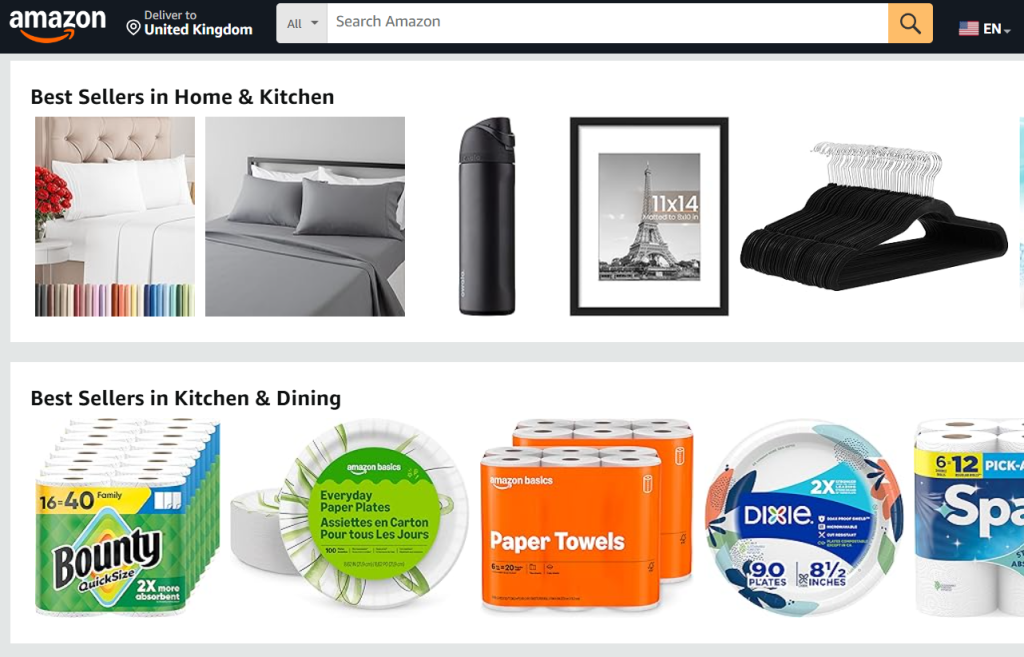
(Image source: Amazon)
Managing inventory levels
As well as launching apps aimed at customers, vibe coding can also be used to improve internal workflows.
Manual stocktakes are a lengthy process that takes up a lot of time every day and can result in human errors being made.
Automating this process through an AI-built app can modernize the way a business keeps track of its inventory. The app will use sales data to determine when an item is running low, sending notifications to prompt reordering before stock runs out completely.
Introducing loyalty programmes
More and more ecommerce businesses are now launching loyalty programs in an attempt to build loyalty and encourage sales, so not having one in place can hinder the growth of an ecommerce business.
These programs don’t have to be complex, but gestures as small as offering exclusive discounts after a user has built up a certain number of points or offering free delivery to members, as we can see from Sephora below, can go a long way.
Vibe coding makes the execution of these features much quicker than would be possible through manual coding, allowing ecommerce business owners to play around with new ideas and see what their customers engage the most with.

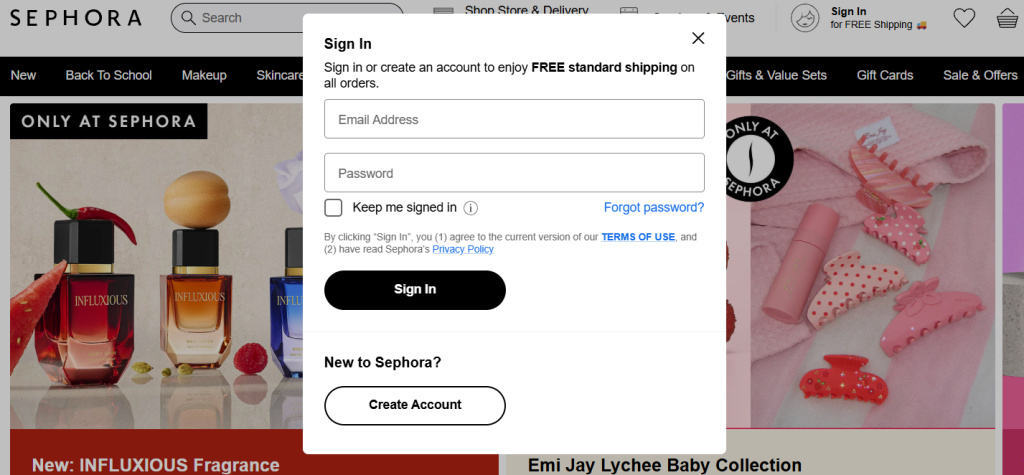
(Image source: Sephora)
Simplifying the returns process
As the years have gone by, many big online retailers have made the returns process as simple as possible by cutting out the need to print a label or speak to a customer service advisor to approve the return.
The easier this process is, the more likely a customer will be to return to the ecommerce store again in the future.
Vibe coding can be used to create an online returns portal that allows customers to log into their account, view their order history, and submit a return request. Notifications can also be set up to keep the customer updated as this return is received and the refund is processed.
Providing 24/7 customer service
Waiting around for a response to a query can be incredibly frustrating, potentially leaving a customer looking elsewhere for what they want or lowering their opinion of the brand. This is why the quality of customer service that an ecommerce business offers can play such a huge part in their success.
Using vibe coding to launch a customer service app that is powered by AI gives users access to instant support at any hour of the day. This is because the AI agent will have been trained to respond to commonly asked questions and provide updates on a delivery’s status.
Wayfair is a good example of a well-known ecommerce brand with a strong customer service platform. From any page in the site, users are able to access the virtual assistant and help centre.

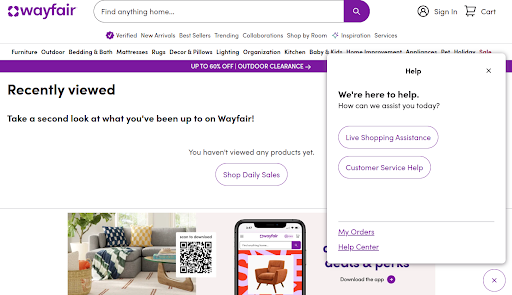
(Image source: Wayfair)
A No-Code Future for Ecommerce
Although vibe coding means creating a brand new app can be done in as little as a few minutes, it still requires a starting point.
The key is figuring out what type of app will bring the most value to shoppers and keep them returning time after time. Alternatively, they can also be built to improve internal workflows and save hours of time every day.
Launching an app was only achievable for ecommerce businesses with a significant budget not so long ago, but the growth of vibe coding has changed the landscape completely.
Now that people can build their own apps without having to have any prior coding experience, it’s allowing forward-thinking online sellers to enhance their online presence in a fraction of the time.
Although vibe coding is still yet to suit creators looking to build more complex features, it has come an incredibly long way in a short space of time. This has opened up opportunities that were once impossible on a budget, yet this is only the beginning.
The Foundation Behind the Code
While vibe coding and AI app builders are incredible for rapidly spinning up custom features, tools, and micro-apps, they are only part of the puzzle. Combining AI-powered micro-tools with a high-performance website template is arguably the best solution for an online business. This approach brings together a professional, trustworthy “outward” appearance with “inward” innovation. An innovative app or a smart chatbot for customer support will be a great addition to a visually appealing and conversion-optimized digital storefront using professional templates from zemez.io.